
This project was made possible by funding from Southampton VR
From March 2022, we delivered a year-long programme of creative engagement with 16-25 year olds Not in Education, Employment or Training (NEET) who were also considered at-risk or vulnerable.
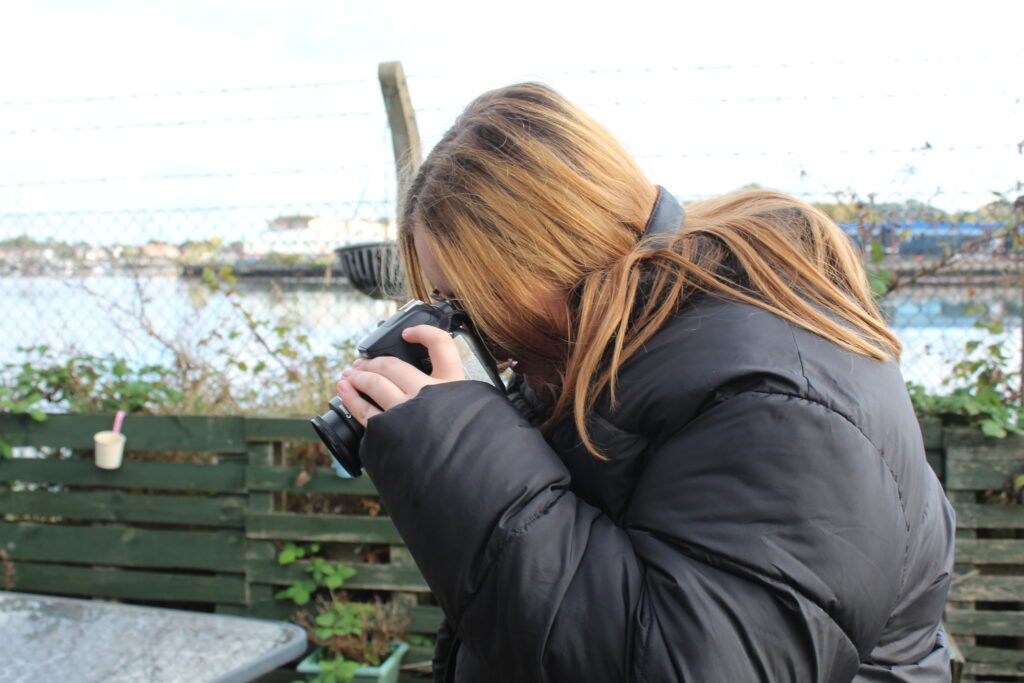
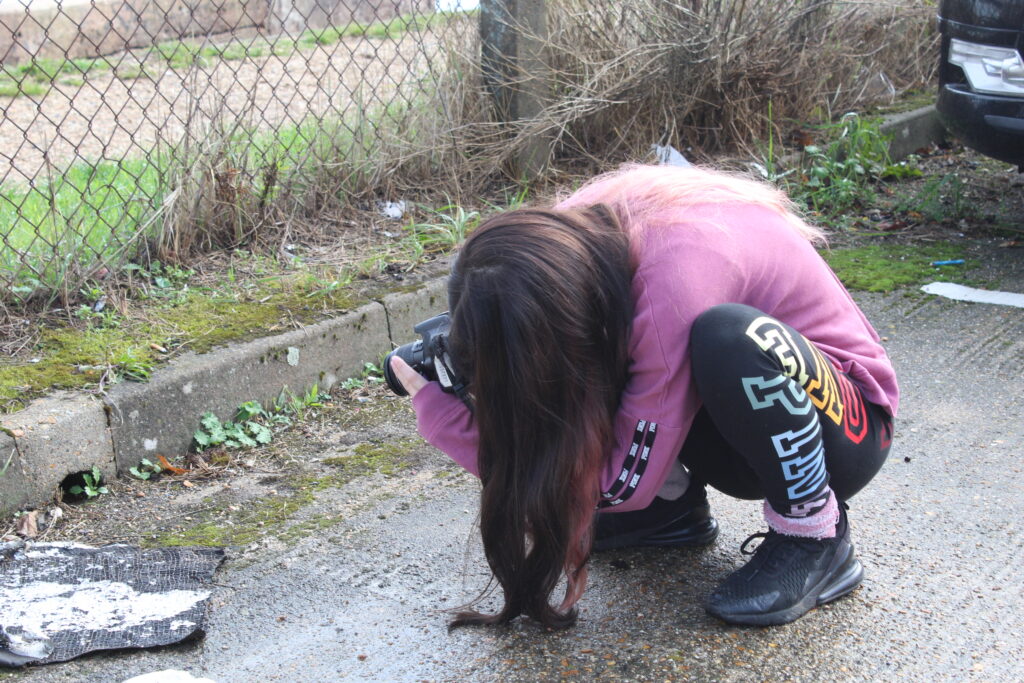
Our Artist Educator, Faye Phillips, led two-hour creative workshops on a weekly basis, focusing on photography and offering opportunities to explore other art forms. 25 young people attended, engaging creatively with topics whilst working towards gaining a recognised qualification—Bronze or Silver Arts Award (coming under Government-defined qualification levels of Entry Level up to Level 2). The group began by learning about DSLR cameras, how to control technical elements of photography, and how to think creatively about image-making.
Enham Trust’s Skills2Achieve
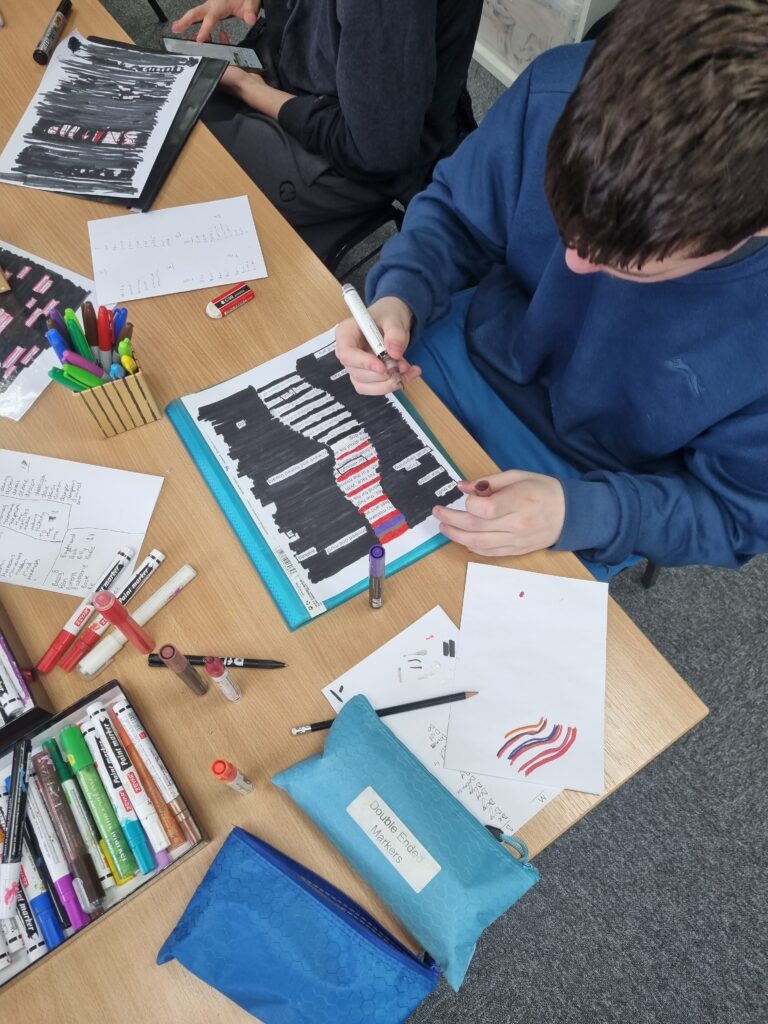
Working with a cohort of young people from Enham Trust’s Skills2Achieve initiative, we modelled our approach on co-created learning, where participants worked alongside our artist educators to make supported choices on subject matter and creative discipline. They self-directed their learning by voting on curriculum choices and artistic mediums, and as a result of this, began an exploration of mixed media, collage and design.
Some of the group initially presented little to no interest in creativity and the arts, but through the course of the project they developed an interest and began to understand and embrace the value of transferable skills.
“They were able to make connections between their creative practice and problem-solving, and how creative thinking could benefit other areas of their skillset,” explained Kristianne Drake, CEO of In Focus.
Working towards an Arts Award qualification provided the young people with a framework to work within, giving them context and purpose, whilst improving their confidence and self-worth. As part of the project, the young people also had the chance to complete a series of Digital Badges. These acted as markers of their efforts, their successes and their growth, all achieved through attendance and taking part. The badges meant that young people could share their achievements online, as well as using them to search for jobs via the Government Indeed website, which supports better access to work.
We used a blend of both group and individual contact time, dependent on the needs of the young people themselves. We also allocated 4.5 hours of pre- and post-delivery time, in order to be able to adequately prepare for and evaluate the sessions after they had taken place. This was very useful as it allowed us to continually reshape or modify the delivery to make sure it was as accessible and inclusive as possible for those taking part.
Different approaches to engagement
We found that working individually with certain young people drastically helped their engagement. One participant began their creative engagement on a one-to-one level, but expressed interest in joining the Skills2Achieve programme. We offered them the option of attending a trial group session to see if they would be comfortable in this new setting. Following the workshop, the young person described how they “found their creativity boosted”, thanks to having peers to collaborate with and bounce ideas off. As a result, they chose to attend group sessions because of this initial no-pressure taster.
Another of the young participants began the term quietly, often struggling to share ideas with the group. However, during a session, they were introduced to the work of a famous artist and their contextual reasoning behind the work. They were so inspired by this that they went back to their peers and tutor, keen to retell the narrative and explain why they found it “inspirational”.
We found great success in allocating one-to-one time with the young people as they began their Arts Award journey. We introduced them to the team and the space, ensuring they felt at ease with what future sessions would involve. We believe giving young people the choice about how they would like to engage makes a real difference to their enjoyment, engagement. and learning. Some chose to remain working individually, others joined a group. We also worked to match their interests with a peer, so they could learn the value of collaboration with a likeminded person. Two young people who began working individually at the start of the project decided to work together, in a way that meant they were able to encourage, inspire and provide feedback to each other about their work.
Behavioural improvement
Over the course of the 22 sessions that took place, the group’s behaviour improved greatly, and their respect for their peers, the staff and the creative space was evident. They began to take the time to clear up at the end of sessions, and were keen to thank the Artist Educators. In write-ups about their creative activities, the group showed increased focus on learning transferable skills, as well as artistic engagement and choice-making. One of the group has asked if they can work towards a Silver Arts Award with us too.
Their tutor said, “I usually teach them English, Maths and IT, and the improvement in these subjects has been significant since they began attending these sessions. This has been a really important part of their course.”
A visit to Southampton City Art Gallery
In January 2023, the group were invited to visit Southampton City Art Gallery. Unfortunately, attendance was low with only five students on the day, but it was clear that they gained a lot from the trip. They were anxious about the visit and unsure what to expect.
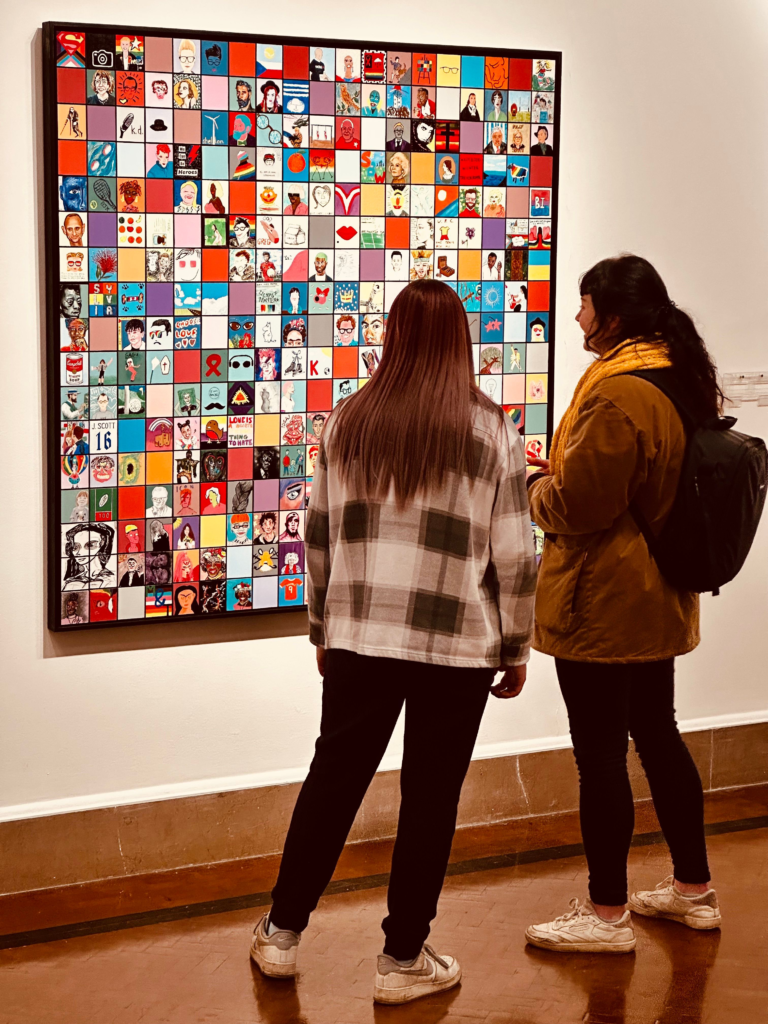
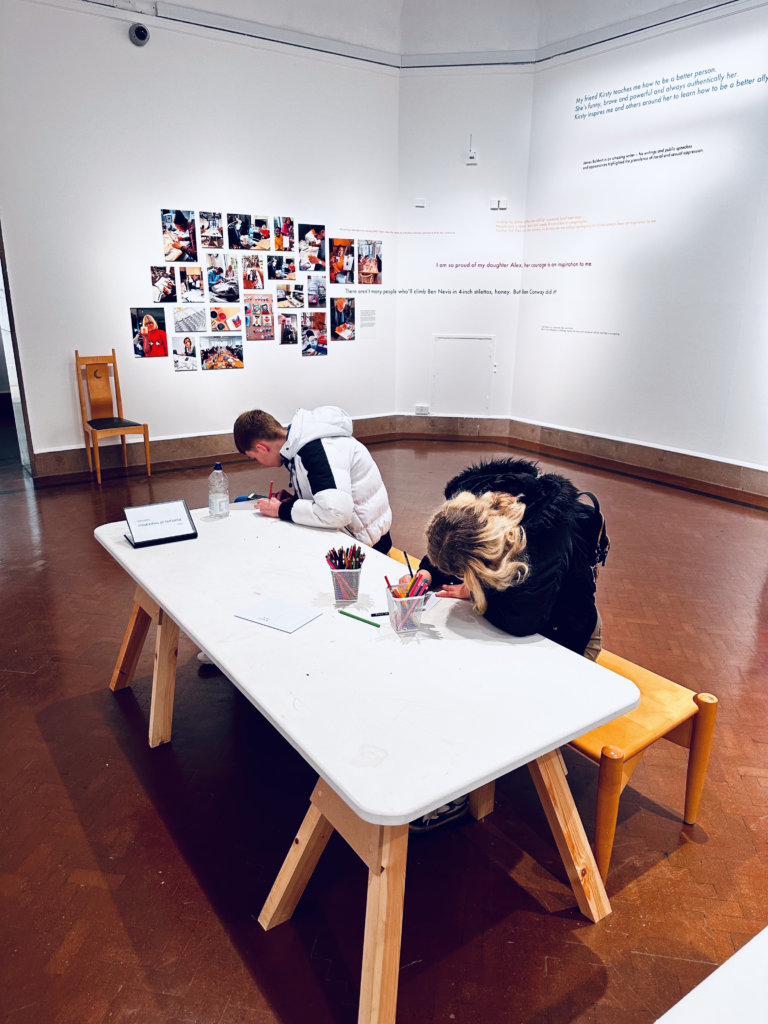
We invited them to write down their feelings before entering the gallery, so they could rate how they felt on a scale of 1-10 (with 1 being ‘I don’t want to do this’ and 10 being ‘I’m really excited to do this’). We then asked them to do the same exercise after their experience at the gallery. From this, we were able to understand that they had felt extremely anxious about entering the gallery, with numbers as low as -4. However, after leaving the gallery, such views had dramatically improved, and participants wrote comments such as “I’m less nervous to come back”, and “I would like to visit another gallery”. They described their experience as “inspiring” and “amazing”. Towards the end of the visit, the group were offered an interactive element, reassured that they did not have to engage if they preferred not to. However, all those in attendance chose to take part, engaging creatively and leaving their work with the gallery to be displayed.
“Thank you so much for your support this year, working with our young people to improve their digital skills and giving them the opportunity to visit galleries. The feedback has been excellent. It would be great to continue working with you, and hopefully extend the offer to our Eastleigh students as well.” — Helen Aymes, Quality and Curriculum Manager, Skills2Achieve, Enham Trust
Breakout Youth, Enham Trust and a visit to Tate Modern
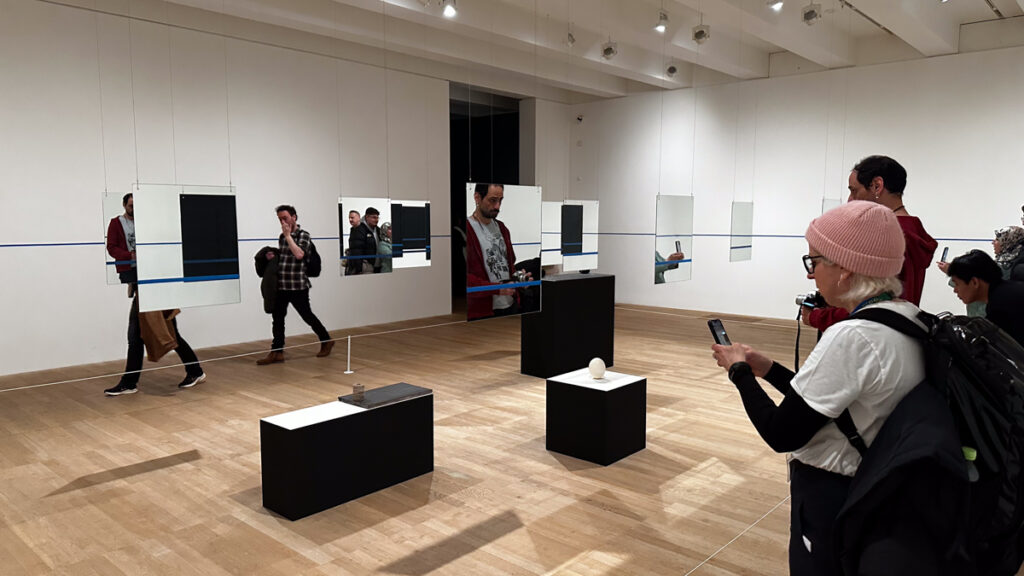
Following this trip, we also took a group of 35 young people from Breakout Youth and Enham Trust to visit Tate Modern on London’s Southbank. We created a well-planned itinerary for the young people so that all those attending knew what to expect, and what we would be doing at the gallery. We structured tasks around specific exhibits exploring representation of identity and space. All participants achieved a Discover Arts Award, as well as the Culture Vulture digital badge (for experiencing culture), and the Rigorous Researcher badge (for conducting research).
Through questionnaires filled out by participants, we learnt that 27% of the young people had never been to London before, with 73% having never visited Tate Modern. 66% of the Breakout Youth staff in attendance had also never been to Tate prior to this trip. Thanks to this funded opportunity, many young people experienced this aspect of arts and cultural engagement for the first time.
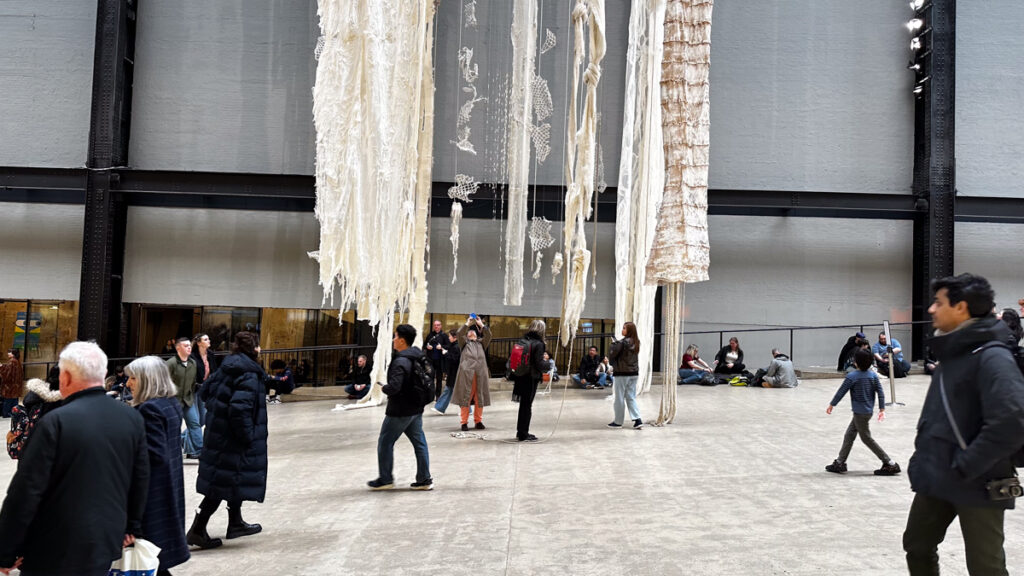
Jem Rycraft, Skills2Achieve Tutor at Enham Trust described the cultural trip. “One thing our young people have missing in their lives are reference points. This will provide opportunities for discussion in the future, and allow them to make connections to other subsequently shared experiences. It’s so vital, but often not valued enough, perhaps because it can be not so easy to quantify in measurable outcomes. It ticked so many boxes—visiting London, looking at and considering art and culture, and sharing that experience as a group.”
Bridge to School project
In February-March 2023, our Artist Educator, Benjamin Cowley, delivered a six-week project at Weston Secondary School. Our aim was to engage with 10 of the lowest-attending pupils and those deemed most likely to be perpetrators of knife crime. “We wanted to show them they would be welcomed back through the door of school attendance,” explained Ben. All sessions were held in-person at the school. Each week involved warm-up exercises such as drawing speed portraits of each other and real-life spot the difference games. Pupils were then given various photography challenges including word scavenger hunts, found alphabets, and photo composites of the school itself. We also used blackout poetry and collage to inform the results of these challenges.
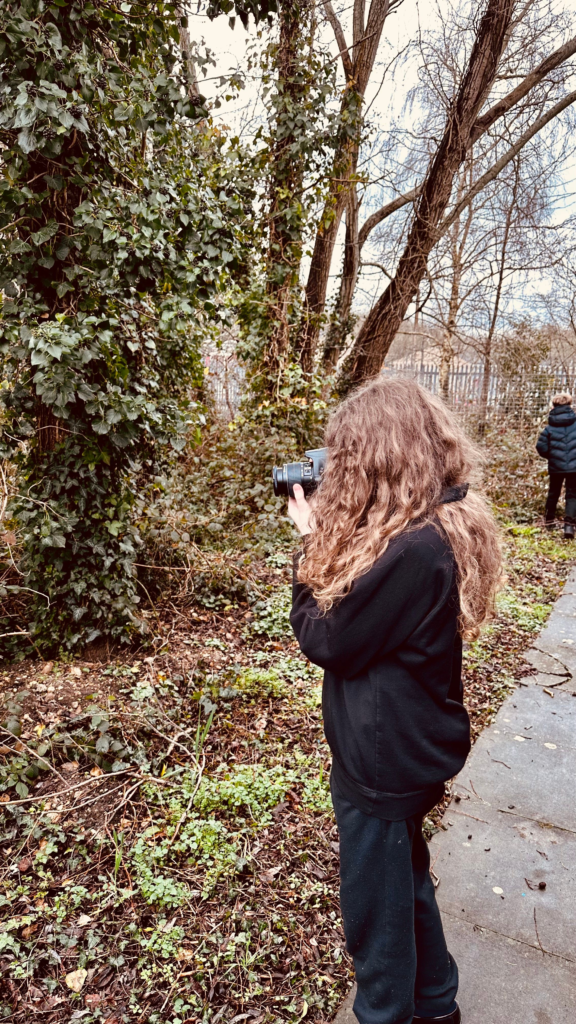
The best images from each session were printed for the young people to take away with them. Participants were awarded Discover Arts Award certificates, as well as two Digital Badges: Turn Up & Commit (for attendance) and Photo Challenge Master (upon completing all photography-based challenges).
Looking ahead to the coming months, a subsequent result of this work means that we will be delivering two further sessions to the Breakout Youth group, as well as to pupils from Weston Secondary School as part of the University of Southampton’s Pathways to Health programme.