
This project was made possible by funding from Arts Council England

In 2022, In Focus facilitated an Arts Award project that ran across seven youth settings in Hampshire—Havant, Basingstoke, Portsmouth, Southampton, New Forest, Aldershot and Winchester. Expanding on our long-standing work with Southampton Youth Offending team, this project delivered arts education outreach to 30 at-risk young people, in collaboration with five Youth Offending Teams, one Pupil Referral Unit and one Looked After Children team. Sessions were led by our team of artist educators (certified Arts Award advisers), and we ran weekly activities for young people that included photography, visual arts and creative writing.
The project’s aim was to engage young people in positive, creative learning, while encouraging them to achieve an Arts Award qualification as recognition of their hard work. It was our hope that this creative engagement would promote desistance for young people in the youth justice system, providing them with a positive, creative outlet for self-expression, validation and confidence-building.
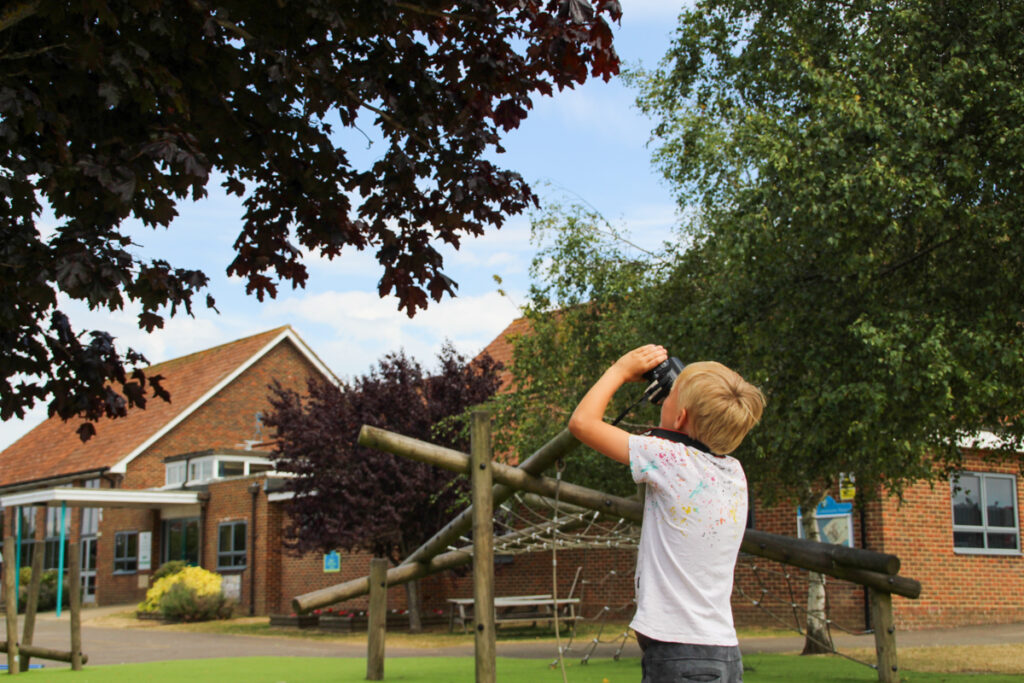
The work promoted and nurtured relationships between the young people, staff and facilitating artists. It recognised and resonated strongly with two of the five factors (identified by Dr Ali Wigzell at the National Association for Youth Justice) for promoting desistance in adolescence: identity and relationships. We worked to create safe spaces for artistic and creative self-expression, supporting the young people to develop work that reflected their own interests and conveyed their perspectives on life, without judgment or agenda.
A staff member from the Southampton Youth Offending Team gave an example of the project’s impact in terms of positive affirmation, engagement and developing social skills:
“At the project’s start, one of the young people was very resistant to working with new people and was negative about the tasks each session. However, by the end of the project, she had developed good relationships with me and both facilitators. She was trying new things more positively, and putting more effort into her work. She smiled and laughed more as the sessions went on, and her barriers slowly came down.”
Before the delivery of the project took place, we met with the Youth Offending Teams to demonstrate how we intended to engage with participants. These sessions were beneficial for the staff to understand how the delivery would work in practice. Putting staff in the young people’s shoes helped provide a fresh insight into how the work would engage with them once the project was underway.
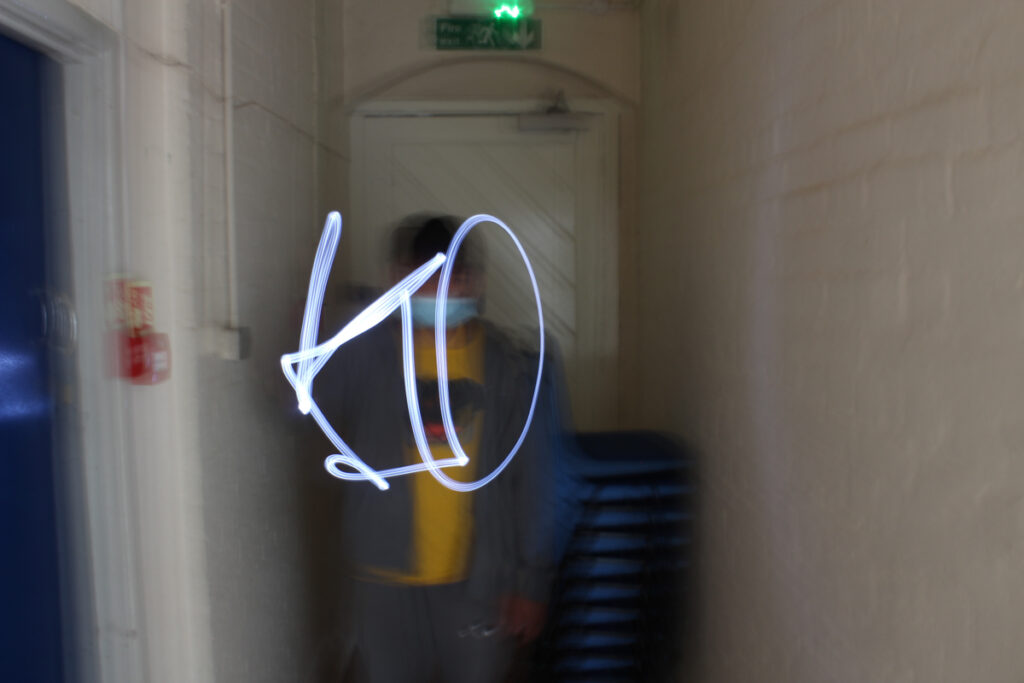
“We were really lucky to have In Focus showing us what they were going to do with the young people,” explained one staff member. “We met Faye and Ben and they did a session for us on what we would all be doing. For the photography, we got to go out and use the cameras; we got to write poetry—all so we could see how it would come together. For me, this was a better way to understand how the project would work, and I could then explain it to the children too.”
We also provided CPD to further support the Youth Offending Teams across Hampshire, enabling their own artist educators to broaden their skills on their journey towards Artsmark (www.artsmark.org.uk). Staff described how they found the CPD sessions incredibly helpful and full of content that would inform their practice and creative engagement in future projects. “Sometimes, just saying it’s going to be art, or it’s going to be creative, you see the barriers come straight down. But if you can really explain the project fully to young people, it’s much easier to sell it to them.”
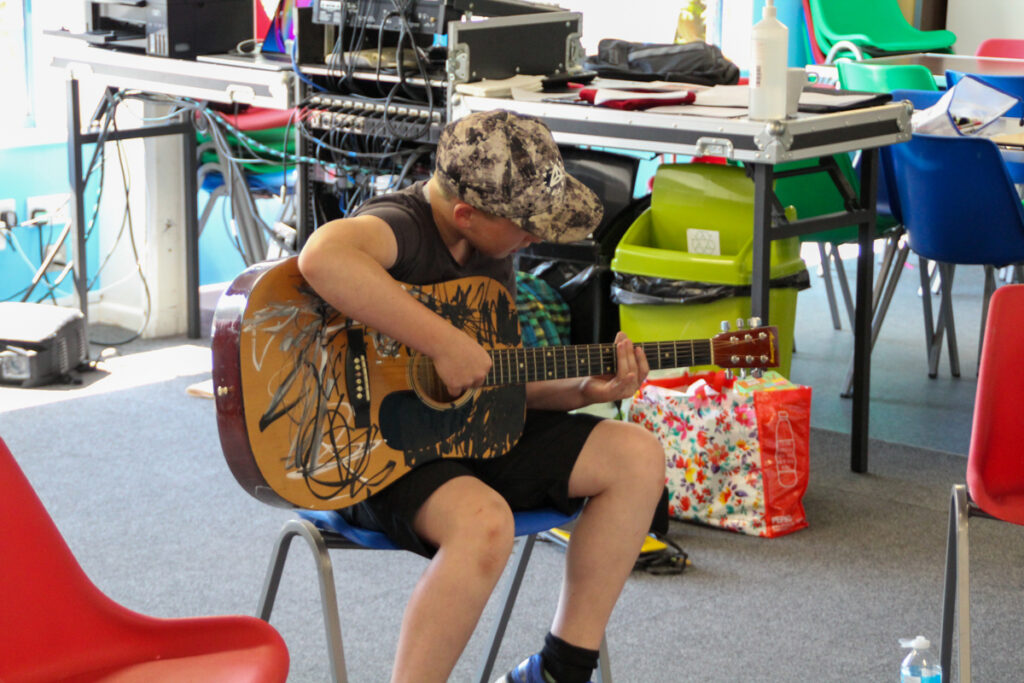
Many of the young people involved had been excluded from formal education settings and had little to no experience engaging in arts and cultural activities. Working towards an Arts Award gave them the chance to work informally with artists, and experience a positive, creative learning environment. A young person described how the artist educators were patient, allowing them to do things their own way without fear of being told off or shouted at.
“I love working with the artists—I love it. When they help me, they never get mad. They never get angry if I do something I’ve been told not to do, they just say, ‘Please don’t do that.’ I really like talking to them.”
Being able to have time and space to explore their own thoughts and learning in this way showed those involved that it was okay to make mistakes, to learn from them and positively understand themselves.
“Art isn’t something you get wrong,” one participant said. “It’s unique. Messing up is basically part of the process.”
Initial reluctance to engage was commonplace, but so was a marked change in perspective, felt by the young people across all of the settings. As one New Forest participant explained, “I thought this was gonna waste my time off, my weekend. But now I’ve been like, oh, I want to go here more, can I be here for more days? I’d give up more days. I’d probably give up my whole summer holiday.”
The close-knit nature of the groups allowed for young people to gain the confidence and ability that they struggled with in larger, busier school settings. “It’s helped me, working in small groups. At school I struggle working in larger groups; I find it hard to focus,” explained a participant in Winchester.
A foster parent reported drastic improvements in their foster child’s behaviour. “She’s done things she’d never get to do at school or at home. I’m hoping it continues. She doesn’t like school; she struggles with socialisation and bullying. It’s good for her to be with other people, to socialise in a safe space with a small group. She’s not sporty, or musical, but she’s creative, and it’s hard to find those sorts of activities for her. She’s actually smiling…we don’t get that at home!”
By the project’s end, 51 Arts Awards had been achieved, a figure which took us 13% above our initial target. Through questionnaires and interviews, we were able to establish that all young people who had been referred to the project were engaged. They felt able to be themselves, and appreciated being given the autonomy to make their own decisions and explore their learning creatively. They were able to form positive and lasting relationships with adults and their peers too. Being able to have access to professional equipment (including DSLR cameras, lighting and props) added value for them, and felt like a genuine opportunity to expand horizons. Having the Arts Award as a framework helped provide context for their exploration and self-expression, and validated their efforts through recognised certification.